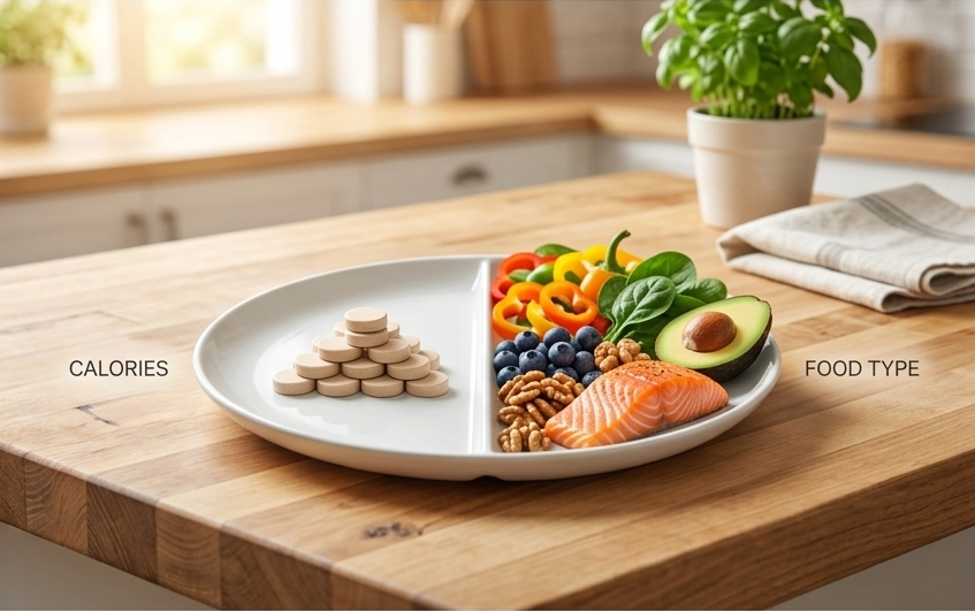
Introduction to The Linkage of Calories and Food Type.
By RDN Ibtisam Fatima CEO & Founder LEVEL NUTRITIONIST, Clinical Dietitian, Medical Nutrition Therapist, Metabolic Health Expert & Hormonal Wellness Coach.
Reviewed and edited by team Level Nutritionist.
Overview:
- WHAT ARE CALORIES?
- WHY ONLY CALORIES COUNT DOESN’T MAKE SENSE?
- WHY CALORIE DEFICIT DOSEN’T WORK?
- WHAT IS THE ROLE OF FOOD TYPE?
- THE LIAISON OF CALORIES AND FOOD TYPE HARVESTS BETTER OUTCOMES
- LET’S CONSIDER THE TYPE OF FOOD WE EAT; NOT FIXATE ON CALORIES ONLY.
Before we examine the connection between calories and food type, let’s first take a brief look at what are calories?
What are Calories?
Calories are a measurement of the energy content of the food. The body needs calories as to perform its functions, such as breathing, circulating the blood, and physical activity.
Why only calories count doesn’t make sense?
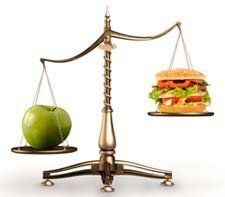
A calorie is not a calorie, in more than one sense. Carbohydrate, fat and protein calories are indeed equal by definition in terms of their energy content, but the body processes each in a distinct way, and these differences have real implications for weight management. When counting calories, you tend to fixate on the calorie figures alone. This can mean choosing foods simply because their calorie counts are low. Sometimes, it might mean choosing ultra-processed “diet” snacks. And because these products are nutrient-light, you may miss out on essential vitamins and minerals.
Why calorie deficit doesn’t work?
In pursuit of losing weight and getting in shape we try to create a calorie deficit by low calorie diets and workouts. However, the first thing you must understand about exercise is that just because you are burning calories doesn’t mean you are burning fat. When you exercise, your body will start burning calories, but the calories that are burned are the calories from carbohydrates in your system also called as energy calories and you will lose mostly “water weight” which leads to a decrease in metabolism. Ultimately, if you lose too much energy calories then, your muscles will not receive enough energy to increase your metabolism which indirectly burn fat. Therefore, you must increase your calorie intake when you are on an exercise program to replace your burned energy calories.
Related: Fat loss program
What is the role of food type?
Food is essential for the survival of living organisms. Because, it provides us with energy to carry out daily activities and develop, grow and repair our body parts so, one food contains a few different nutrients and not all foods contain the same ones. This is why it is important for us to eat a variety of foods from all 4 Food Groups, to make sure that our bodies get the right kind of nourishment for proper functioning.
Related: specialty diet, Sports and athletic nutrition
The liaison of calories and food type harvests better outcomes:
In order to get the desired results in fighting obesity you must prioritize the healthy and nutritious food to make up your daily calorie intake. Since, healthy food choices nurture you from within and boost your immunity so, you’re less likely to develop any health disorder.
Related: Nutrition plan for multiple health disorders.
Let’s consider the type of food we eat; not fixate on calories only:
To cut a long story short, what really matters is not how many calories a particular food contains, but how that food is digested and absorbed by your body that’s why I feel calorie counting is a flawed approach to weight loss. There was an American chemist in the 19th century called Wilbur Olin Atwater who calculated the calorie numbers for different foods, by working out the total energy intake you get from them. But his calculations never took into account the energy it takes our cells to metabolize food in order to use it. This is important. It’s why for example a calorie of protein makes you feel fuller than a calorie of fat, because protein is more complex to metabolize. For every 100 calories of protein you eat, you only ever absorb 70. So, we need to consider the type of food we’re eating, rather than fixating purely on the calorie content. You could be aiming to eat 800 calories a day, but how much energy your body actually absorbs will depend on whether you’re eating sugar, celery, or steak.
Related: Nutrition counselling, Weight management, Fat loss program, Pediatric Nutrition.
Conclusion
Although calories count and its connection to nutrition are a multi-faceted topic, we’ve provided an adequate overview of it. We certainly hope it helped to shed some light on the matter, enabling you to go from here.
For a personalized nutrition coaching for weight management with an on-site dietician, book a free consultation or contact us for appointment.
[882496]supplies professional anti-violence equipments and solutions for the whole world with strong and perfect production capacity. anti-violence.org